


__original.jpg?quality=80&width=1024)

DIY vs. Professional Window Tint Installation
Nothing changes a vehicle's personality quite like a dark smoky tint. But it can be expensive forcing you to choose between DIY installation and hiring a professional? DIY window tinting...
E. Adnan |

Gloss Maize Pink Vinyl Wrap (DS06-HD) - 5ft x 59ft (1.52 x 18m)-Best value ⭐ / Maize Pink (DS06-HD) is backordered and will ship as soon as it is back in stock.

Gloss Maize Pink Vinyl Wrap (DS06-HD) - 5ft x 59ft (1.52 x 18m)-Best value ⭐ / Maize Pink (DS06-HD) is backordered and will ship as soon as it is back in stock.
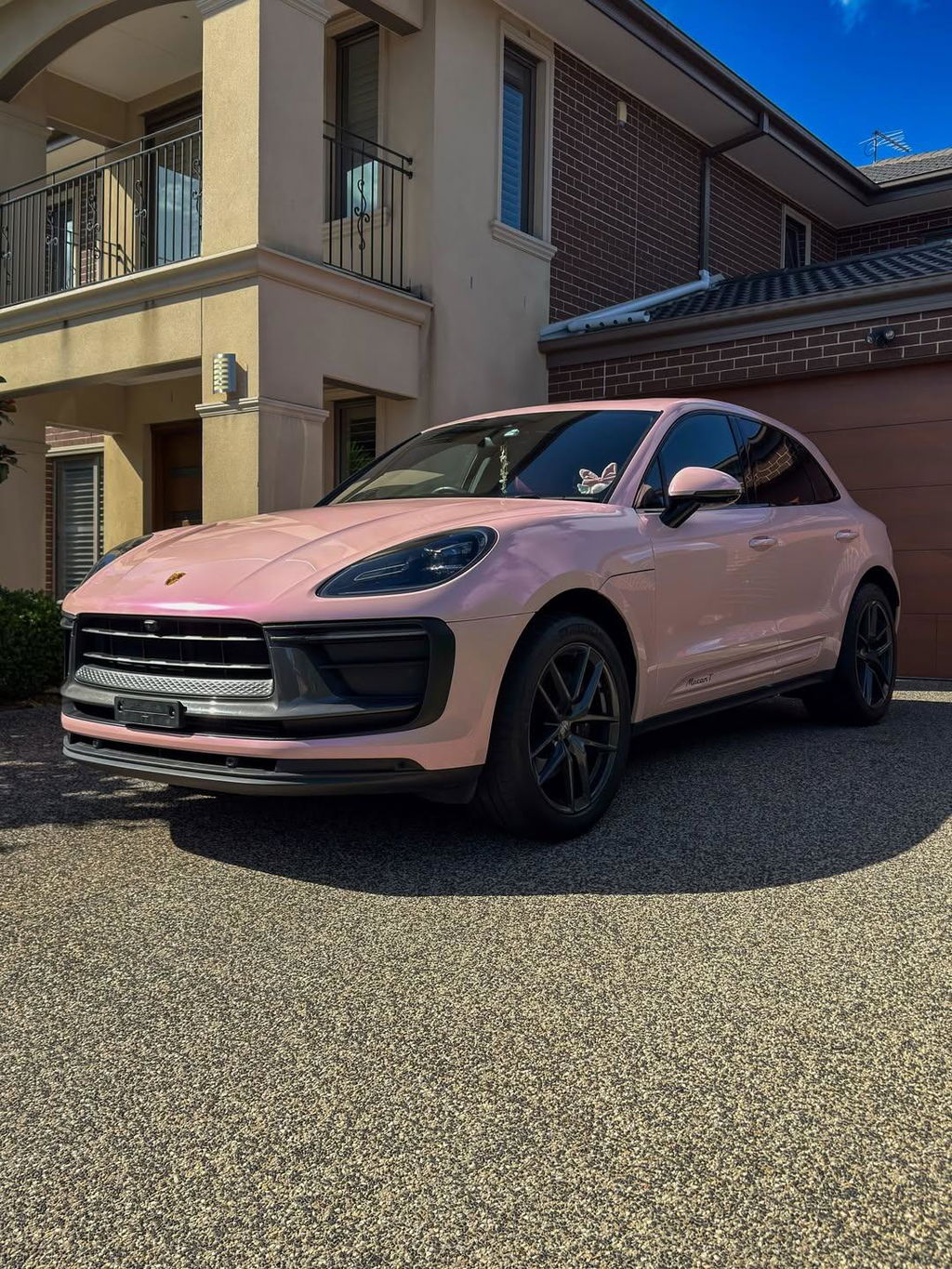
Really like how this Macan turned out. The Maize Pink hits that “not too bright, not too boring” brief perfectly. In some lighting it looks soft and elegant, and then the magenta tones come through just enough to give it that extra presence. Clean, classy, and still eye-catching without overdoing it.
Appreciate it! That balance was exactly what we were aiming for.
This stunning JEEP TRACKHAWK wrapped in GLOSSY PINK a perfect blend of bold style and attitude that's impossible to ignore.
Thanks for the feedback! This color really stands out!
Yes it went fantastic, here are some pics!
Thank you for sharing! We appreciate your feedback
Your material is good easy to stretch, Gloss Color is shiny and less orange peel. And glue is easy when remove.
Thank you for your comment and the final results! We truly appreciate it!
It's working like a charm. The color matches the vinyl already have perfectly and I haven't noticed any blemishes or imperfections
Maize Pink (DS06-HD) is a sophisticated color-shift finish that blends soft blush pink, champagne gold, rose gold, and delicate peach tones into one highly reflective surface. At first glance, the wrap appears as an elegant dusty rose with subtle golden warmth. As light moves across the bodywork, layers of pink pearl, champagne, apricot, and rose-gold reflections emerge simultaneously, creating exceptional depth and a liquid-metal appearance.
In shade and overcast conditions, the color becomes softer and more refined, resembling a muted blush or porcelain rose finish with creamy undertones. Under direct sunlight, the metallic pigments become significantly more expressive, transforming the surface into a glowing mixture of pink pearl and warm champagne reflections that continuously move across every curve and body line.
Unlike conventional pink wraps that can appear playful or overly feminine, DS06-HD maintains a distinctly luxurious and mature character. The combination of soft pink and warm metallic gold creates a finish that feels closer to bespoke ultra-luxury paint than a traditional color-shift film.
How TeckWrap compares
Cheap film won't last a season. Legacy brands charge a brand premium. TeckWrap sits in the middle: professional-grade film at an honest price.
The cheap way
Saves money up front, then bubbles, fades and cracks within a season.
Price per roll
✕$80 to $350 per roll. Cheap upfront, then you pay a shop to strip it.
Film construction
✕Monomeric calendered vinyl. Shrinks back off the edges within months.
Release liner
✕Paper liner. Curls in storage and telegraphs into the finish.
Adhesive system
✕Rubber based. Grabs on contact and leaves residue on removal.
Warranty and removal
✕None stated, or a term with nothing behind it.
Color and finish range
✕A short list of solids. Color drifts between production batches.
Professional-grade film at an honest price. Reversible, paint-safe, and color-shifting.
Price per roll
From $399 per roll, enough film to cover a standard sedan.
Film construction
High-grade polymeric multilayered hybrid vinyl with built in air release.
Release liner
Plastic PET release liner, holds the film tension flat for clean gloss off the roll.
Adhesive system
Henkel solvent acrylic. Repositions during install, peels back paint safe.
Warranty and removal
3 years vertical, rated by climate zone and panel. Claims paid.
Color and finish range
Over 220 colors in gloss, satin, matte, metallic, chrome, color shift.
See the finish in person before you commit.
The legacy way
Comparable film, but you pay a brand premium.
Price per roll
✕$600 to $900 or more per roll for the same coverage.
Film construction
–Comparable construction, priced as if the badge were a material.
Release liner
–Same plastic liner standard, at roughly double the roll price.
Adhesive system
–Same acrylic chemistry class, with a brand premium on top.
Warranty and removal
–Long headline term. Read the exclusion list before you trust it.
Color and finish range
✕Solid core range, thin on color shift and specialty finishes.
Vinyl / Color Shift FAQ
Calendered, and no. Cast and calendered are two ways of making vinyl, not two quality grades. Cast is thinner and bends further, which suits deep recesses. Calendered is thicker, so it takes stone chips, brushes and door dings, and it covers the paint underneath instead of showing it through.
Because almost nobody keeps a wrap for ten years. Color changes, resales and fleet rotations take wraps off cars at three to five. You would be paying for years five through ten on a thinner film that takes more damage in the years you actually use it. If you genuinely keep a car a decade, buy the longer rated film. Most people do not.
It covers it. UV, road film and light surface contact, yes. Stone chips and impact, no. That is paint protection film, a different product at a different thickness and price. Plenty of owners run PPF on the nose and vinyl over everything else.
Yes, and from one batch. Pigment and flake shift slightly between production runs. Two rolls of the same color bought months apart can read as two colors on neighboring panels in daylight. Order the whole job plus about 20 percent.
It shifts where the light moves. Curvature and viewing angle do the work, so fenders, bumpers, roof pillars and door shoulders travel the full range while a flat van side holds close to one color. Judge it on a curved panel outd
The face color, most of the time. You see it head on, at 90 degrees to the panel, and the flip color appears at glancing angles along body lines and around curves. On a low, wide car you catch the flip far more often than the renders suggest. On a tall SUV you see the face color almost all day.
Stretch and roll direction. Pulling the film spreads the pigment layer and moves that panel to a different point in its travel, and pieces cut in opposite directions off the roll catch light differently. Mark direction on the liner, cut every panel the same way, and inlay recesses instead of pulling them.
This is the finish where partial jobs work best. There is no color match to fail against, because the panel is meant to read differently from everything around it. Roofs, mirror caps, spoilers and diffusers are the highest return per meter in the range.
Because a sample is flat, small and indoors. Color on a car reads across curves, at angles, in daylight that moves all day. Metallics shift the most, matte the least. Hold the largest sample you can get against the car outside before you commit.
Almost certainly not. Lifting edges mean the film was never post heated, or never got hot enough. Post heating erases the film's memory and locks it into its new shape. Skip it and the film spends the next year trying to go back to being a flat roll.
Only if it is fully cured and sound. Fresh paint outgasses for weeks and you get bubbles. Weak or previously repaired paint can lift on removal. The film does not cause that. It finds it.
Brush washes will, and the damage stacks. Brushes drag grit, lift edges, and polish permanent shiny patches into satin and matte. Touchless is fine, hand washing is better. Keep a pressure washer 16 inches back and off the edges.
The effect sits in the pigment structure, not in a coating, so it does not drift out of phase. What kills it is a dulled surface. Brush washes, polish and gloss enhancers scatter the reflection, and once the top layer is hazed the whole shift reads flat and grey. Hand wash it.
No. There is no clear coat to cut back, so polishing removes the top coat and leaves a permanently dull patch. PRO+ films with the self healing top coat close light swirls with gentle heat. Anything deeper means a new panel.
Nothing changes a vehicle's personality quite like a dark smoky tint. But it can be expensive forcing you to choose between DIY installation and hiring a professional? DIY window tinting...
E. Adnan |

Wrapping your taillights with a tint PPF is one of the simplest upgrades you can make to give your car a bold, smoky look. This step-by-step guide covers everything, from...
E. Adnan |

Applying color paint protection film (PPF) can be tricky, and mistakes during the installation process can lead to bubbles, creases, and poor adhesion. Learn about the 5 most common color...
E. Adnan |

Installing a car wrap isn’t just about applying vinyl—it requires skill, precision, and the right supporting products. Adhesive promoters help strengthen vinyl grip on tricky edges and curves, while tack...
Nicki Ammelung |

Avoid Car Wrap Lifting & Peeling – Get a Flawless Finish Every TimeDIY vinyl wrapping can be challenging, and adhesion failure is one of the most common issues. From poor...
Shukhrat Ismatov |

Here are the 10 non-negotiable skills for flawless vinyl film & PPF wraps. From bubble-free seams to contour mastery… How many have you truly checked? Level up in minutes! The...
Phyllis Li |

Car wrapping has exploded in popularity, offering a dynamic way to personalize vehicles. But what happens when the canvas isn't pristine? Can you successfully wrap a car with rust or...
Phyllis Li |

Wrapping a car in vinyl during winter can be challenging due to cold temperatures, but with the right preparation and tools, you can still achieve a professional finish. Work in...
Vasile Sayfutdin |
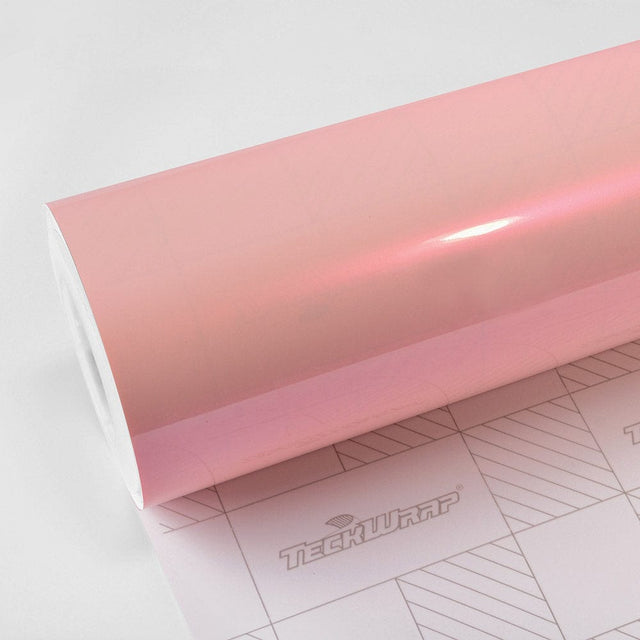
Maize Pink (DS06-HD) is a sophisticated color-shift finish that blends soft blush pink, champagne gold, rose gold, and delicate peach tones into one highly reflective surface. At first glance, the wrap appears as an elegant dusty rose with subtle golden warmth. As light moves across the bodywork, layers of pink pearl, champagne, apricot, and rose-gold reflections emerge simultaneously, creating exceptional depth and a liquid-metal appearance.
In shade and overcast conditions, the color becomes softer and more refined, resembling a muted blush or porcelain rose finish with creamy undertones. Under direct sunlight, the metallic pigments become significantly more expressive, transforming the surface into a glowing mixture of pink pearl and warm champagne reflections that continuously move across every curve and body line.
Unlike conventional pink wraps that can appear playful or overly feminine, DS06-HD maintains a distinctly luxurious and mature character. The combination of soft pink and warm metallic gold creates a finish that feels closer to bespoke ultra-luxury paint than a traditional color-shift film.
Size
Color
1 color available


