

Satin Wrap Installation Tips and Tricks
Satin wraps give your car a modern and high-end look, without the high gloss that comes with traditional vinyl. Whether you're wrapping the vehicle or just parts like the hood...
Shukhrat Ismatov |

TeckWrap Ionix15 Magnetron Window Tint Film (2.5mil) - Diamond black I15-2.5mil / 5ft x 16ft (1.52 x 5m) is backordered and will ship as soon as it is back in stock.

TeckWrap Ionix15 Magnetron Window Tint Film (2.5mil) - Diamond black I15-2.5mil / 5ft x 16ft (1.52 x 5m) is backordered and will ship as soon as it is back in stock.
Key attributes:
Total solar energy rejection reaches 68% here, the highest figure the series produces, backed by 92% infrared rejection and more than 99% ultraviolet rejection at 16% visible light transmission. Deep privacy and maximum heat control arrive together.
Internal reflectance of 6% keeps the cabin side of the glass from mirroring at night, which is the usual weakness of dark metallised film. The 2.5 mil sputtered construction holds colour and reflectivity stable rather than drifting with age.
Specify for rear side windows and rear windshields on vehicles carrying passengers, cargo or equipment that needs to stay out of sight. Warranty is 5 years. Confirm local rules and use a professional installer.
How TeckWrap compares
Cheap film won't last a season. Legacy brands charge a brand premium. TeckWrap sits in the middle: professional-grade film at an honest price.
The cheap way
Saves money up front, then bubbles, fades and cracks within a season.
How it blocks heat
✕Dye absorbs light. The glass heats up and radiates inward.
Solar energy rejected
✕Around 35 to 45 percent, even on the darkest shade.
Infrared rejection
✕Low, and it falls further as the dye breaks down.
Signal interference
✕Metallized film blocks GPS, keyless entry, and radio reception.
Color stability
✕Turns purple, fades, and bubbles as the adhesive fails.
Warranty
✕A shop warranty that ends when the shop closes.
Professional-grade film at an honest price. Reversible, paint-safe, and color-shifting.
How it blocks heat
Rejects infrared instead of absorbing it, so the glass stays cooler.
Solar energy rejected
Up to 70 percent total solar energy rejected, stated per SKU.
Infrared rejection
Up to 93 percent infrared rejection, published on every product page.
Signal interference
Ceramic lines are non metallic. Phone, GPS and TPMS unaffected.
Color stability
Does not fade to purple. Color change is a covered warranty failure.
Warranty
Eight years, manufacturer backed. Five on the sputtered silver lines.
See the finish in person before you commit.
The legacy way
Comparable film, but you pay a brand premium.
How it blocks heat
–Ceramic or multilayer. Same method, at the legacy brand price.
Solar energy rejected
–High TSER across the range, with a matching price tag.
Infrared rejection
–High IRR. Check which band it was measured on.
Signal interference
–Ceramic lines are clear of it. Metallized lines are not.
Color stability
–Color stable across the warranty period, at a higher price.
Warranty
–Lifetime on paper. Read what the exclusions actually remove.
Window Film / Ionix magnetron FAQ
For the infrared number. Magnetron sputtering delivers 92 percent infrared rejection, above what the ceramic tier reaches, with 68 percent total solar energy rejection on Ionix15 and 63 percent on Ionix20. If heat is the whole reason for the job and the glass is not full of electronics, this is the stronger film.
Ionix20 at 22 percent for front side windows where you still need peripheral vision, Ionix15 at 16 percent for rear sides and rear windshield where privacy and maximum heat control matter. Check your local limits for each position before ordering.
No. External reflectance sits around 8 percent, which reads as a normal dark tint rather than a mirror finish. Internal reflectance is held at 6 percent, which is unusual for a sputtered film and is why it does not mirror the cabin back at you at night.
Almost never. That is mounting solution still evaporating through the film, and it clears on its own. Give it a few days in warm weather and up to a few weeks in cold. Cure time is 24 hours minimum above 15°C (59°F) before you touch it.
Not for at least 24 hours, and longer in cold weather. Dropping a window before the adhesive has set drags the film edge down into the door and peels it. This is the single most common self inflicted failure on a fresh tint job.
Not on these constructions. Purple fade and bubbling are dyed film failures, where the dye breaks down and the adhesive goes with it. Sputtered metal and nano ceramic layers hold color and performance instead of drifting. Zenith carries an 8 year warranty, Ionix 5 years.
It can. The layer is metallic, so aftermarket antennas, some telematics units and sensitive electronics can be affected. Factory systems on most vehicles are fine. If the car has aftermarket communication equipment, take ceramic instead.
No, and this is the most expensive misunderstanding in tinting. Darkness is privacy and glare. Heat rejection is construction. Zenith70 at 75 percent visible light transmission still rejects 88 percent of infrared and 45 percent of total solar energy, while a cheap dark dyed film can reject far less heat than that while making the car harder to see out of. Buy the construction, then choose the shade.
TSER, not IR rejection. Infrared rejection measures one slice of the spectrum and is the number films are marketed on because it reads highest. Total Solar Energy Rejected accounts for the whole solar load, which is what you feel. When a film advertises a huge IR number and never prints its TSER, that is the answer.
Because you drive at night. High internal reflectance turns the inside of the glass into a mirror after dark and throws your own dashboard back at you. Both Zenith and Ionix hold internal reflectance to about 6 percent, which is low for the category and is a comfort figure nobody advertises.
Check the net figure, not the film figure. Your glass already blocks light before any film goes on, so a 35 percent film on factory glass lands well below 35 percent measured. That is how people pass at the shop and fail at the roadside. Front, rear and windshield limits differ by state and country, so confirm locally before ordering.
Satin wraps give your car a modern and high-end look, without the high gloss that comes with traditional vinyl. Whether you're wrapping the vehicle or just parts like the hood...
Shukhrat Ismatov |

Your spoiler takes the worst of the sun and road debris, and its curves, tight edges, and bolt holes make it the perfect practice piece for vinyl wrapping. This guide...
Shukhrat Ismatov |

Your bumper takes more stone chips, bug strikes, and road grit than any other panel on your car. This guide walks you through applying paint protection film to it, from...
E. Adnan |

Window tint is a precision job, and most mistakes can't be fixed once the film is on the glass. This guide walks you through installing tint on the inside of...
Shukhrat Ismatov |

Nothing changes a vehicle's personality quite like a dark smoky tint. But it can be expensive forcing you to choose between DIY installation and hiring a professional? DIY window tinting...
E. Adnan |

Wrapping your taillights with a tint PPF is one of the simplest upgrades you can make to give your car a bold, smoky look. This step-by-step guide covers everything, from...
E. Adnan |

Applying color paint protection film (PPF) can be tricky, and mistakes during the installation process can lead to bubbles, creases, and poor adhesion. Learn about the 5 most common color...
E. Adnan |

Installing a car wrap isn’t just about applying vinyl—it requires skill, precision, and the right supporting products. Adhesive promoters help strengthen vinyl grip on tricky edges and curves, while tack...
Nicki Ammelung |
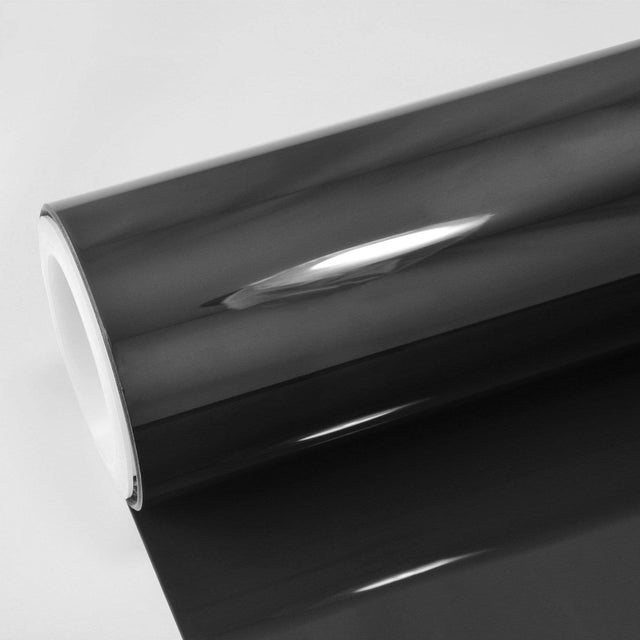
Key attributes:
Total solar energy rejection reaches 68% here, the highest figure the series produces, backed by 92% infrared rejection and more than 99% ultraviolet rejection at 16% visible light transmission. Deep privacy and maximum heat control arrive together.
Internal reflectance of 6% keeps the cabin side of the glass from mirroring at night, which is the usual weakness of dark metallised film. The 2.5 mil sputtered construction holds colour and reflectivity stable rather than drifting with age.
Specify for rear side windows and rear windshields on vehicles carrying passengers, cargo or equipment that needs to stay out of sight. Warranty is 5 years. Confirm local rules and use a professional installer.
Color
1 color available
Size


