


Carbon fiber made its name on race cars, where every gram counts. On a road car, most people want it for the look. Carbon fiber vinyl wrap puts that look on the parts you already have, outside on the roof, hood, mirrors and spoiler, and inside on the dash, door and console trim. Our carbon films come in gloss, twill, matte and brushed finishes, with a raised weave you can feel under your fingertips. They peel off when you want the original finish back. Carbon is one of six finishes in our vehicle wrap line.
Carbon Wrap Types Compared
Every film here has a texture pressed into the surface. The pattern, the top layer and the film underneath decide how it looks on the car.
| Carbon type | What you see | How it behaves on a car | Shop |
|---|---|---|---|
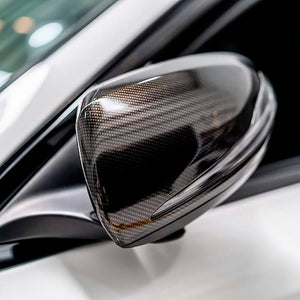 Gloss Ceramic CarbonRCF03, RCF03-R | A fine weave under a mirror-gloss top layer, like clear-coated factory carbon. Premium Black adds a warm bronze glint in direct sun. | Our most popular carbon for mirrors, spoilers, roofs and interior trim. It is directional, so line up the weave on parts that sit side by side. | Ceramic Carbon (RCF03) Premium Black (RCF03-R) |
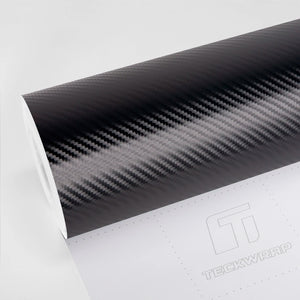 Twill CarbonRCF11 | A diagonal 2x2 twill under deep gloss. It is the weave most factory carbon parts use. | Light rolls across the diagonal ribs as you walk past. It is made for exterior accents and interior trim, not full cars. | Twill Carbon (RCF11) |
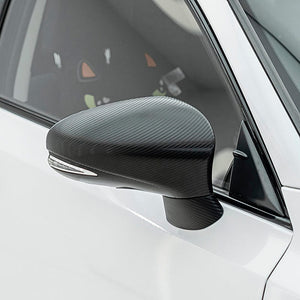 Dry Carbon LookCF01, CF02 | A raised medium-cell weave with a softer sheen than the ceramic films. Noir Black keeps the highlights soft, and Pitch Black is the deepest black in the range. | It reads like factory dry carbon trim. Pitch Black needs a hotter post-heat, 100-110 °C (212-230 °F). | Noir Black (CF01) Pitch Black (CF02) |
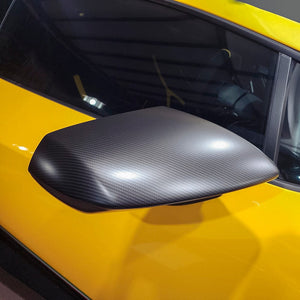 Matte CarbonRCF03M | The ceramic carbon weave with a flat, non-reflective surface. Charcoal highlights show only at some angles. | It suits roofs, mirrors and interior trim, and it needs matte care, so no wax, polish or hard buffing. It is sold as a full 59 ft roll. | Matte Ceramic Carbon (RCF03M) |
 Brushed MetalBM04 | A graphite black with a fine linear grain, like machined metal. It has no weave and no sparkle. | The grain runs one way, so cut every piece in the same direction. Dirt sits in the grain, so rinse and dry along it. | Brushed Black (BM04) |
Carbon Fiber Wrap vs Hydro Dipping vs Real Carbon Fiber
A carbon fiber wrap goes on the parts you already have and comes off when you want. Hydro dipping prints the pattern onto removed parts for good. Real carbon fiber is a new part, and it costs far more than either.
| Feature | Carbon Fiber Wrap | Hydro Dipping | Real Carbon Fiber |
|---|---|---|---|
| What it is | Textured vinyl film, 0.13-0.16 mm, applied over paint | A printed carbon pattern transferred in a water tank, then clear coated | Woven carbon cloth set in resin, sold as a new part |
| Texture | Raised weave you can feel | Flat print under clear coat | Real fibers under clear coat |
| Parts off the car | No, wrapped in place | Yes, each part is removed and sent out | Yes, the old part is replaced |
| Going back to stock | Peel off with heat within 2 years | The part has to be refinished | Refit the original part |
| Best for | Exterior parts and interior trim, with the option to change your mind | Small interior parts you can take off | Track and show builds that need less weight |
| Install | Skilled DIY or a professional installer | A dipping shop | Fitted as a replacement part |
Carbon Film Specs
| Film | Polymeric hybrid calendered vinyl with a pressed texture and air-release channels |
|---|---|
| Thickness | 0.13-0.16 mm (5.1-6.3 mil) |
| Adhesive | Solvent acrylic, transparent. You can reposition it at first, and it reaches full bond in 24-48 hours. |
| Liner | Coated paper liner on the gloss carbon films. Clear plastic liner on Matte Ceramic Carbon (RCF03M) and Brushed Black (BM04). |
| Conformability | Smooth and moderately curved parts. Use inlays for deep recesses, because stretch flattens the texture. |
| Application temperature | 17-23 °C (63-73 °F) |
| Post-heat | 95 °C (203 °F) for RCF films, 100 °C (212 °F) for Noir Black and Brushed Black, 100-110 °C (212-230 °F) for Pitch Black |
| Overlap | 3-4 mm |
| Outdoor durability | Up to 3 years on vertical surfaces and about 2 years on a full panel, depending on climate and care. Remove it within 2 years for the cleanest removal. |
| Rolls | All are 5 ft (1.52 m) wide. Lengths are 9.8, 16, 33, 49 and 59 ft (3, 5, 10, 15 and 18 m). Brushed Black starts at 16 ft, and Matte Ceramic Carbon comes as a full 59 ft roll. |
| Shelf life | 2 years at 10-20 °C (50-68 °F) and 50% humidity |
Each film has its own technical data sheet. Find them on our TDS page.
Installing and Caring for Carbon Vinyl
Carbon and brushed films are textured, and stretch flattens the texture. A weave pulled hard over a curve looks shallow and plastic next to the part beside it. Mark the direction on the liner, keep the weave or grain running the same way on every piece, and use inlays in deep recesses instead of pulling film into them. Post-heat every edge, and buy the whole job from one production LOT. For a roof, hood or a full set of parts, find a TeckWrap installer near you who has worked with structured film.
Inside the car, take trim pieces off where you can. Clean each one with isopropyl alcohol to remove dressing sprays, wrap every edge around to the back so it stays down, and post-heat interior pieces the same way as exterior parts.
Dirt settles into the texture, so a carbon wrap needs more water, not more pressure. Hand wash with a pH-neutral shampoo, rinse well and dry along the pattern with a soft microfiber. Do not dry wipe it, and skip automatic washes, brushes, high-pressure washers, wax, polish and solvents. Matte Ceramic Carbon needs matte-safe products only.
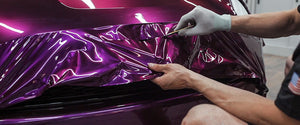 Prepping and cutting vinyl filmInstall guide
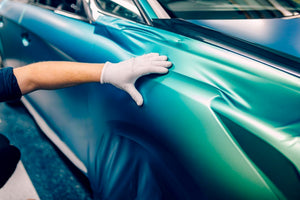 Why wraps lift and bubbleTroubleshooting
 Car washes and wrap lifeCare guide
 Protecting a wrap from UV and scratchesCare guide
Carbon Fiber Wrap FAQ
Is carbon fiber wrap real carbon fiber?
No. It is a vinyl film with a carbon weave pressed into the surface. It gives you the look of carbon fiber, but not the strength or weight saving of a real carbon part. That is why it costs a small fraction of a real carbon hood or mirror cap.
Does carbon fiber vinyl wrap look real?
From a few feet away, yes. The weave is pressed into the film, so it has real texture, not a flat print. The gloss films come closest, because a clear layer over the weave reads like clear-coated carbon. Up close, real carbon still shows more depth, and an overstretched weave looks flat, so a clean install matters as much as the film.
What is the difference between 3D, 4D and 5D carbon fiber vinyl?
These numbers are marketing labels, not an industry standard, and brands use them differently. In general, 3D means a raised weave with a low sheen, 4D adds more gloss to the weave, and 5D or 6D adds a clear gloss layer on top that looks like clear-coated carbon. Ceramic Carbon (RCF03) and Premium Black (RCF03-R) have that clear gloss layer, while Noir Black (CF01) is closer to a low-sheen dry carbon look. Order a sample to compare them in daylight.
Is carbon fiber wrap worth it?
If you want the look, yes. A wrap costs far less than real carbon parts, goes on the parts you already have, and peels off when you sell the car or change your mind. If you need less weight or more strength, only real carbon fiber does that.
Can you carbon fiber wrap a whole car?
You can, but carbon films are made for parts: roofs, hoods, mirrors, spoilers, diffusers and trim. On a full car the weave has to line up across every panel, and the stretch needed on bumpers and recesses flattens the texture. Most owners put carbon on a few parts and wrap the rest in gloss, satin or matte vinyl.
Can you put carbon fiber vinyl on interior trim?
Yes, and it is a common use. Carbon vinyl works on dash panels, door inserts, center consoles, gear shift surrounds and other hard trim. Take the pieces off where you can and clean them well, because interior dressing sprays stop the film from sticking. Wrap each edge around to the back so it stays down. Interior trim stays out of the weather, so it lasts longer than parts on the outside of the car.
Will carbon fiber wrap hold up on a hood?
Yes. Hoods are one of the most common carbon jobs. A hood takes sun from above and engine heat from below, so it ages faster than a door or mirror. Clean under the edges where the film wraps around, post-heat every edge so it does not lift, and park under cover when you can.
How long does carbon fiber wrap last?
Up to 3 years on vertical surfaces like mirrors and doors, and about 2 years on a full panel, depending on climate and care. Hoods and roofs take the most sun and age first. Interior trim lasts longer, because it stays out of the weather.
Can you clear coat over carbon fiber vinyl?
No. Paint solvents can attack the film, and a clear coated wrap can no longer peel off cleanly, which takes away the main reason to wrap. For more shine, choose a gloss carbon such as Ceramic Carbon (RCF03), which already has a clear gloss layer over the weave.
Can I install carbon fiber vinyl myself?
Yes, on small parts. Mirror caps, trim and spoilers are good first jobs. The air-release channels let trapped air out, and you can lift the film and lay it again before you press it down. If a small bubble shows later, prick it with a fine pin and press it flat. Keep the weave running the same way and do not overstretch it. For a hood or roof, work with a second person or find a wrap shop near you. The warranty requires professional installation.
Does carbon fiber wrap damage paint?
Not on sound factory paint, if you remove it within 2 years. Warm the part first, then peel the film slowly at a low angle. Repainted or repaired panels can lift with the film.


