



Satin Wrap Installation Tips and Tricks
Satin wraps give your car a modern and high-end look, without the high gloss that comes with traditional vinyl. Whether you're wrapping the vehicle or just parts like the hood...
Shukhrat Ismatov |

Deep Gloss Sapphire Blue Color PPF (CPX501) - 5ft x 9.8ft (1.52 x 3m) / Sapphire Blue (CPX501) is backordered and will ship as soon as it is back in stock.

Deep Gloss Sapphire Blue Color PPF (CPX501)

Deep Gloss Sapphire Blue Color PPF (CPX501) - 5ft x 9.8ft (1.52 x 3m) / Sapphire Blue (CPX501) is backordered and will ship as soon as it is back in stock.
Material was fantastic! Customer loved it!
Thank you so much for your feedback!
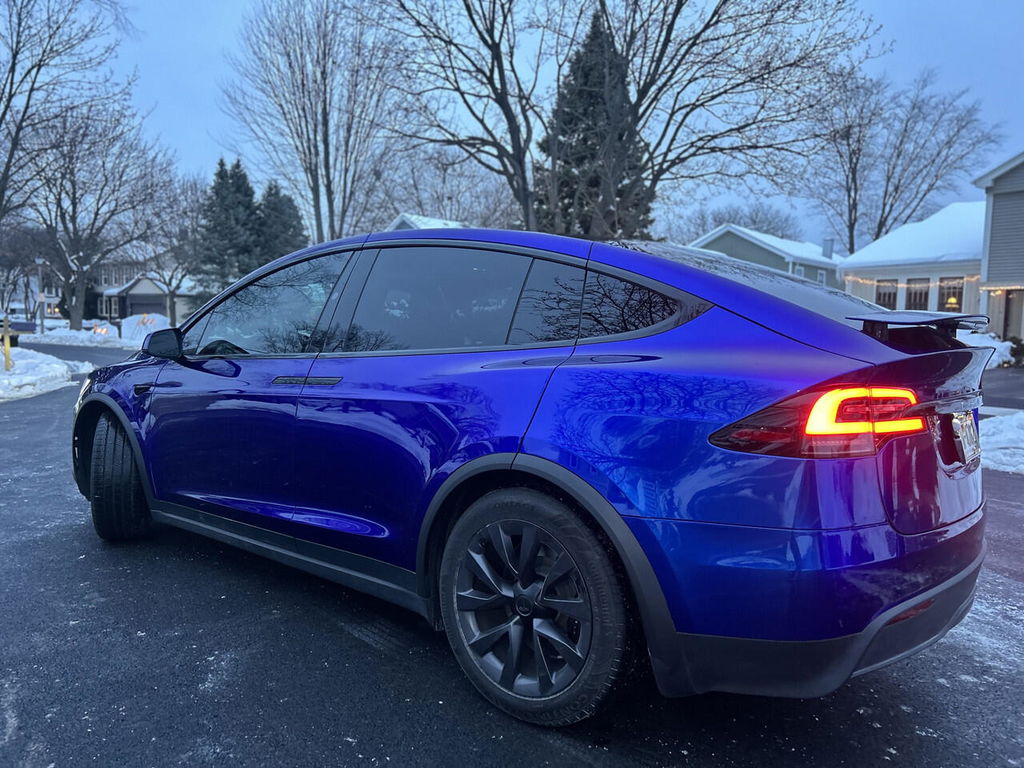
Bright blue can lose its depth across a full vehicle. Sapphire Blue keeps a dark foundation under its cobalt reflection, so the panels never read as flat electric blue.
Sapphire Blue starts with a rich cobalt center. Direct reflections brighten toward vivid royal blue, while shaded sections settle into navy. A slight violet pull keeps it away from cyan or turquoise. The color is highly saturated, yet enough darkness remains around panel edges to show the vehicle's form. Gloss reflections stay crisp over the blue rather than softening it into a pale or milky finish. The result remains unmistakably blue from a distance. Dark trim sharpens the contrast.
Love vivid factory blues? Put this darker sapphire energy on a Porsche Cayman, Subaru BRZ, Chevrolet Corvette C8, or Lexus RC F.
How TeckWrap compares
Cheap film won't last a season. Legacy brands charge a brand premium. TeckWrap sits in the middle: professional-grade film at an honest price.
The cheap way
Saves money up front, then bubbles, fades and cracks within a season.
Cost to get the look
✕Cheapest sticker price. You are buying color, not protection.
What one roll covers
✕Short cuts only. A full car means joining two rolls.
Dry install, clean finish
✕Dry install in name only. Adhesive lines stay in the finish.
What comes in the box
✕A bare roll in a bag. Bring your own everything.
Warranty you can claim
✕Eight years on paper, from a factory you cannot trace.
Color range
✕A long catalog online. Made to order, and the batch drifts.
Professional-grade film at an honest price. Reversible, paint-safe, and color-shifting.
Cost to get the look
From $239. One film does the color change and the chip protection.
What one roll covers
59 ft roll (18 m), 5 ft wide. A full car from one roll.
Dry install, clean finish
Dry install with minimal adhesive lines, and heat clears most of them.
What comes in the box
Premium pack with install tools, care guidance and warranty paperwork.
Warranty you can claim
5-year manufacturer warranty, fully traceable for installers.
Color range
37 live colors, held in stock, traceable to the batch. New shades land every quarter.
See the finish in person before you commit.
The legacy way
Comparable film, but you pay a brand premium.
Cost to get the look
✕Protection line first, color added later, at a premium price.
What one roll covers
✕Standard roll is 49 ft (15 m). Long panels need a second roll.
Dry install, clean finish
–Dry or wet depending on the line, at a higher material cost.
What comes in the box
✕A roll and a warranty card. Tooling is the shop's problem.
Warranty you can claim
–Ten year headline term. Read the exclusion list before you trust it.
Color range
✕A tight core palette, through a distributor, at a premium price.
Color PPF / Color Shift & Chameleon FAQ
Yes, without exception. Shift films carry the most visible lot to lot variation of anything in the range, because a small pigment difference moves the whole travel of the color. Order the full car at once with an over allowance, and never top up a panel from a later lot.
No, and the difference is the material. Vinyl is PVC and it is there to change the color. Color PPF is TPU, a thicker elastomer that absorbs impact and closes its own light scratches with heat. You are buying stone chip protection that happens to change the color, which is why it costs what it costs.
Depends on what you are protecting against. If you want a new color for the next few years and the car lives an ordinary life, a wrap does that at a fraction of the cost. If the car takes highway miles, gravel, track days or a hard commute, and you want the paint underneath untouched when it comes off, this is the film for that job.
Almost always stretch, not the film. Pigment and flake spread when the film is stretched, so an overstretched area sits at a different point in the shift than the panel next to it. Keep stretch even across a panel and off show faces, and inlay rather than pull.
Much more. A shift film reads differently at every angle, so an overlap is both thicker and out of phase with the piece beside it. Plan the whole car before the first piece goes on, run seams into shadow lines and panel gaps, and use one continuous piece per visible face wherever a pattern allows it.
Because a photograph freezes one angle and one light. These films are built to travel between readings as you move around the car and as the light changes through the day. Look at a physical sample outdoors, on a curved surface, at two different times of day before you commit a full car to it.
Yes, and this is the difference nobody warns you about. On clear film an overlap disappears. On pigmented film every overlap is a double thickness of color, so it reads as a visible darker line from ten feet away. Plan the panel layout so seams fall in shadow lines and gaps, and expect fewer, larger pieces than a clear job.
Only if they have installed TPU before. Color PPF stretches further, grabs differently, needs slip solution and does not forgive the habits that work on vinyl. The most expensive mistakes on this film are made by good vinyl installers on their first PPF car. Ask for TPU work in their portfolio, not wrap work.
Never. A blade on paint is a scratch you have paid for twice, and knifeless tape leaves a line in a film this thick. Use plotted patterns and wrapped edges. If a panel has no pattern available, the piece gets cut off the car and tucked, not scored on it.
Only if the paint is fully cured and sound. Fresh paint outgasses for weeks and traps solvent under the film. Weak or previously repaired paint can lift on removal, and a film with this much adhesion and thickness is less forgiving about it than a wrap. Test an inconspicuous area first.
No to both. It bonds to paint, not to another film's top coat, and layering traps edges that lift. Strip what is on the car first.
Light marks, yes. Wash swirls, fingernail scratches at the door handle and fine marring close up with heat, from the sun on a warm day or from warm water. Anything that went through the top coat into the color layer does not come back.
Satin wraps give your car a modern and high-end look, without the high gloss that comes with traditional vinyl. Whether you're wrapping the vehicle or just parts like the hood...
Shukhrat Ismatov |

Your spoiler takes the worst of the sun and road debris, and its curves, tight edges, and bolt holes make it the perfect practice piece for vinyl wrapping. This guide...
Shukhrat Ismatov |

Your bumper takes more stone chips, bug strikes, and road grit than any other panel on your car. This guide walks you through applying paint protection film to it, from...
E. Adnan |

Window tint is a precision job, and most mistakes can't be fixed once the film is on the glass. This guide walks you through installing tint on the inside of...
Shukhrat Ismatov |

Nothing changes a vehicle's personality quite like a dark smoky tint. But it can be expensive forcing you to choose between DIY installation and hiring a professional? DIY window tinting...
E. Adnan |

Wrapping your taillights with a tint PPF is one of the simplest upgrades you can make to give your car a bold, smoky look. This step-by-step guide covers everything, from...
E. Adnan |

Applying color paint protection film (PPF) can be tricky, and mistakes during the installation process can lead to bubbles, creases, and poor adhesion. Learn about the 5 most common color...
E. Adnan |

Installing a car wrap isn’t just about applying vinyl—it requires skill, precision, and the right supporting products. Adhesive promoters help strengthen vinyl grip on tricky edges and curves, while tack...
Nicki Ammelung |

Bright blue can lose its depth across a full vehicle. Sapphire Blue keeps a dark foundation under its cobalt reflection, so the panels never read as flat electric blue.
Sapphire Blue starts with a rich cobalt center. Direct reflections brighten toward vivid royal blue, while shaded sections settle into navy. A slight violet pull keeps it away from cyan or turquoise. The color is highly saturated, yet enough darkness remains around panel edges to show the vehicle's form. Gloss reflections stay crisp over the blue rather than softening it into a pale or milky finish. The result remains unmistakably blue from a distance. Dark trim sharpens the contrast.
Love vivid factory blues? Put this darker sapphire energy on a Porsche Cayman, Subaru BRZ, Chevrolet Corvette C8, or Lexus RC F.
Size
Color
1 color available


