


Smoked lights change the whole face of a car. TeckWrap headlight and taillight tint PPF gives you that darker, cleaner look without spray paint or new housings, and it protects the lens while it does it. Each film is a thick, self-healing TPU that takes stone chips, blocks the UV that turns lenses yellow, and peels off cleanly whenever you want the factory look back. Pick your shade by how you drive: Spectra (THL55) for a light smoke that keeps your beam usable at night, or Lumex (THL30) for a deep, blacked-out lens on taillights and show cars.
Choose Your Shade
Both films share the same TPU build, top coat and adhesive. The only difference is VLT (visible light transmission), the share of light that passes through. A higher number means a lighter lens and more light on the road.
| Shade | What you see | Best for | Shop |
|---|---|---|---|
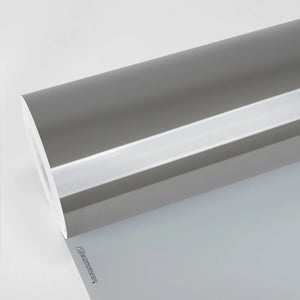 Spectra Light SmokeTHL55, 54% VLT | A clear smoke in daylight. The lens looks darker and more finished, and the low beams stay sharp at night. | Headlights on cars driven after dark, plus fog lights, reflectors and a lighter taillight smoke. | Spectra (THL55) |
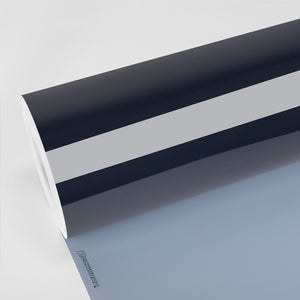 Lumex Dark SmokeTHL30, 30% VLT | A deep, blacked-out lens. Night output drops noticeably. | Taillights, show cars and track cars. Not ideal for headlights on a daily commute. | Lumex (THL30) |
Tint PPF vs PVC Tint Film vs Spray Tint
There are three common ways to smoke a lens. Only tint PPF protects the lens while it darkens it, and only a quality film comes off without refinishing the lens.
| Feature | Tint PPF | PVC Tint Film | Spray Tint |
|---|---|---|---|
| What it is | Smoked TPU film, 330 µm thick | Thin PVC color film | Aerosol tint sprayed onto the lens |
| Stone chips | Absorbs them | Little or no protection | Does not stop them |
| UV and yellowing | Blocks about 99% of UV and does not amber | Can fade and haze within a season | Depends on the product and its clear coat |
| Light scratches | Heal with gentle heat | Stay in the film | Have to be sanded and polished out |
| Shade | Even and fixed, 54% or 30% VLT | Fixed, often uneven on curves | Depends on the number of coats |
| Removal | Peels off residue-free with heat | Aggressive adhesive can lift the lens hard coat | Must be sanded or stripped off the lens |
Headlight & Taillight Tint PPF Specs
| Film | TPU paint protection film with a smoked, gloss surface |
|---|---|
| Top coat | Heat-repair self-healing coating |
| Thickness | 330 ±10 µm total, with a 210 ±5 µm application layer (8.27 mil) |
| Light transmission | Spectra (THL55) 54% ±3%. Lumex (THL30) 30% ±3%. |
| UV resistance | About 99% |
| Clarity | About 1.5% haze and 90 GU gloss at 60° |
| Peel adhesion | About 2200 g/inch. Holds edges flat on deep housings and removes residue-free with heat. |
| Elongation | About 350% for the film and 110% for the top coat |
| Temperature resistance | Up to 100 °C (212 °F) |
| Installation | Wet application with slip solution, at 17-23 °C (63-73 °F) |
| Cure | 24-48 hours before washing |
| Roll | 0.4 m x 15 m (1.3 ft x 49 ft) |
| Warranty | 3 years against manufacturing defects, including yellowing, cracking, bubbling and adhesive failure. It does not cover abrasion, scratches, impact damage or normal wear. |
Each film has its own technical data sheet. Find them on our TDS page.
Installing & Caring for Headlight & Taillight Tint PPF
Tint PPF installs like clear PPF, wet and with heat. A lens is small, but it is often deeply curved, and a dark shade shows every flaw, so work slowly.
- Clean the lens, decontaminate it and dry it fully. Apply only to undamaged factory or professionally refinished lenses.
- Spray slip solution on the lens and the adhesive side of the film, then float the film into position.
- Squeegee from the center out to push the solution out from under the film.
- Warm the film to relax it into curves and recesses, keeping the surface below 100 °C (212 °F).
- Wrap or tuck the edges cleanly so no solution is trapped around the perimeter.
- Let the film cure for 24 to 48 hours before the first wash.
After that, hand wash with a pH-neutral shampoo and a soft mitt, and pat the lens dry. Avoid wax, solvents and petroleum distillates on the film. Light wash marks fade with sun or gentle heat. A scratch that cuts through the top coat will not heal, but because each lens is a single small piece, replacing it is quick.
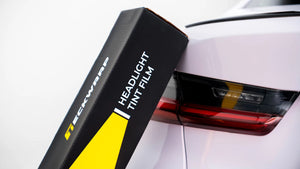

Headlight and Taillight Tint PPF FAQ
Is headlight and taillight tint legal?
It depends on where you drive. Lamp tint is regulated in most states and countries. Headlights are usually treated the most strictly, and taillights, brake lights and indicators still have to stay clearly visible and keep their red or amber color. Check the rule where your car is registered before you install, not after.
Does it stop headlights and taillights from yellowing or fading?
Yes, and that is one of its biggest benefits. Plastic lenses break down under UV, which is why older cars have foggy headlights and faded taillights. The film blocks about 99% of UV, so it takes that exposure instead of the lens, and the film itself is rated against yellowing for the 3-year warranty.
Will the film damage my lens when I remove it?
Not on a sound factory headlight or taillight lens. Warm the film and peel it back slowly, and it releases without leaving adhesive behind. Lenses that are already cracked, crazed or refinished can lift with any film, so check the lens before you install.
Can I install headlight and taillight tint PPF myself?
Yes, if you are comfortable with wet application and heat. The film stretches well into tight housings, but deep lenses need patience, and a dark shade shows every mistake. Taillights and flatter lenses are good first jobs. For complex headlights, use an installer with PPF experience. Find a wrap shop near you.


